
How to Identify a Pure Kanjivaram Silk Saree?
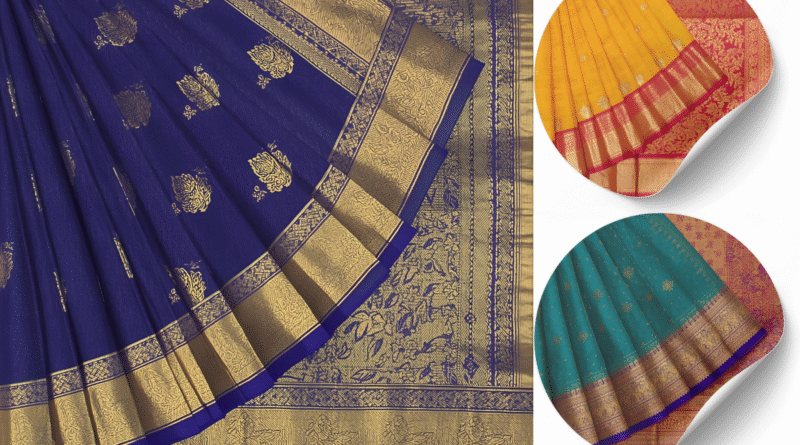
Kanjivaram silk sarees are among the most prized jewels in Indian handloom heritage. Born in the temple town of Kanchipuram in Tamil Nadu, the sarees are famous for their deep colors, smooth texture, and fine zari work. They are not only clothes; they are heirloom sarees, passed generation after generation. Although, the popularity of Kanjivaram silk has also increased a great number of imitations in the market. Being a consumer, it becomes imperative to understand how to identify an original pure Kanjivaram silk saree and an imitation one.
In case you are looking for investing in this ageless piece of Indian art, here is a step-by-step guide to spot an original Kanjivaram silk saree.
1. Pure Kanjivaram Silk Saree: Verify the Silk Mark Label
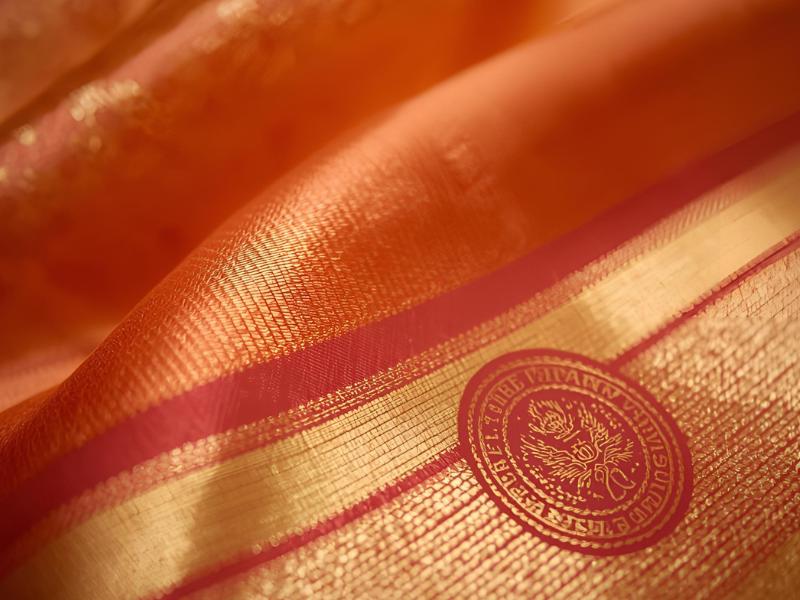
Pure Kanjivaram Silk Saree: The easiest and most credible method of ensuring authenticity is to search for the Silk Mark certification. The Silk Mark Organisation of India gives this tag and it is an assurance that the saree is pure silk. A true Kanjivaram saree from well-known stores will most likely have this certification. If a saree lacks a Silk Mark label, beware of buying it.
2. Pure Kanjivaram Silk Saree: The Zari Test
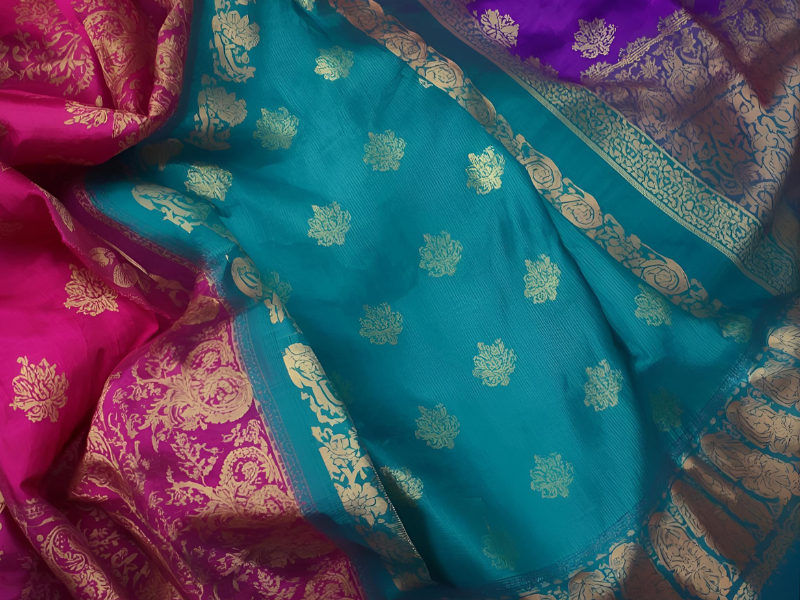
One of the most distinctive aspects of a Kanjivaram saree is its golden zari borders and motifs. In a genuine Kanjivaram, zari is woven from actual silver threads that are gold-dipped. To test this:
Examine the zari closely. In genuine sarees, the zari will appear to have a reddish or coppery undertone due to the silver.
Compared to this, imitation sarees employ plastic or synthetic zari that appears excessively shiny and lacks the understated richness of gold work.
A thread test may also be performed: gently pull out a tiny zari string and set it alight. If it burns to become ash, it is genuine; if it melts like plastic, it’s not genuine.
3. Pure Kanjivaram Silk Saree: The Joint and Weave Test
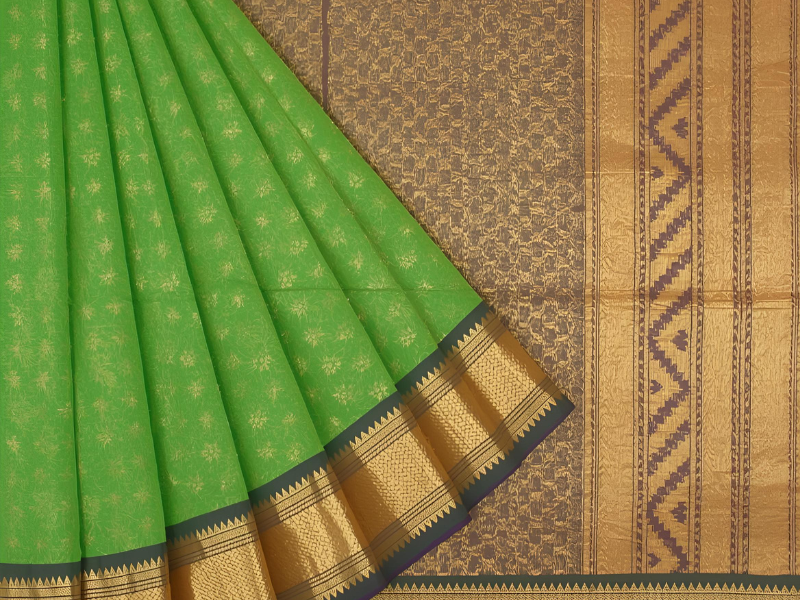
Kanjivaram sarees are renowned for the exclusive weaving technique applied. The border and the body of the saree are woven separately and interlocked afterwards by a specific interlocking weave called Korvai.
This joint in a traditional saree is so strong that if you attempt to split the body and the border, they will not detach.
Spurious sarees usually also contain border stitching or gluing, which flakes off within two or three washes.
One of the distinguishing features of a genuine Kanjivaram silk saree is this Korvai style.
4. Pure Kanjivaram Silk Saree: The Sheen of the Fabric
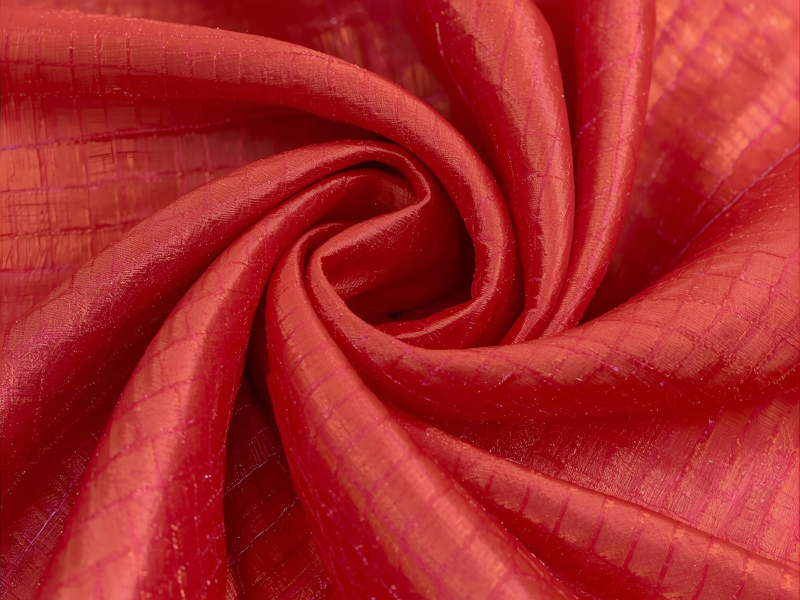
Pure silk carries a natural sheen which is impacted when viewed from different perspectives. This is due to the nature of the silk strands themselves, reflecting light in a unique way. Hold the saree in sunlight or white light and tilt it a bit. If the tone of the color is a bit different, you’re holding real silk. Polyester or synthetic silk will look dull and lifeless in comparison.
5. Weight of the Saree
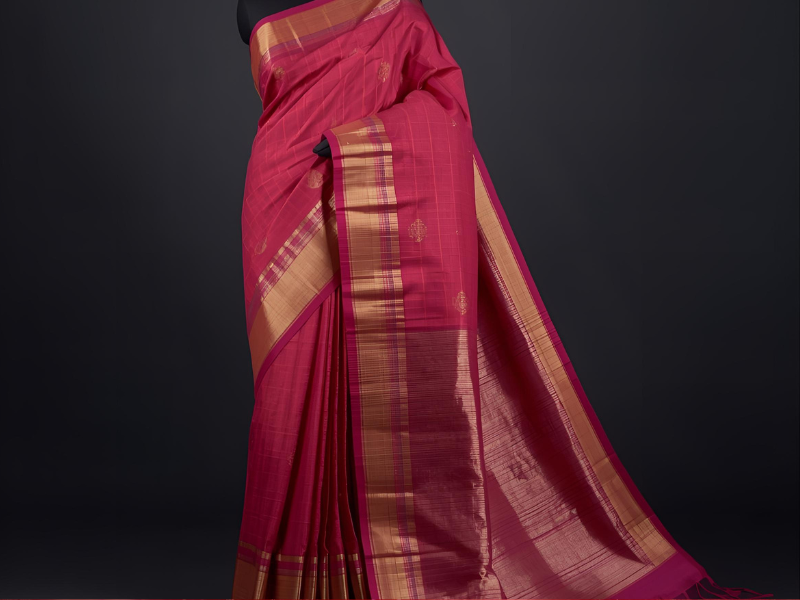
A genuine Kanjivaram silk saree is heavier than the synthetic ones. This is due to the fact that pure mulberry silk and gold/silver zari threads naturally weigh the fabric. Even a plain pure Kanjivaram with no heavy work will be heavy in hand.
6. Price Tells a Story
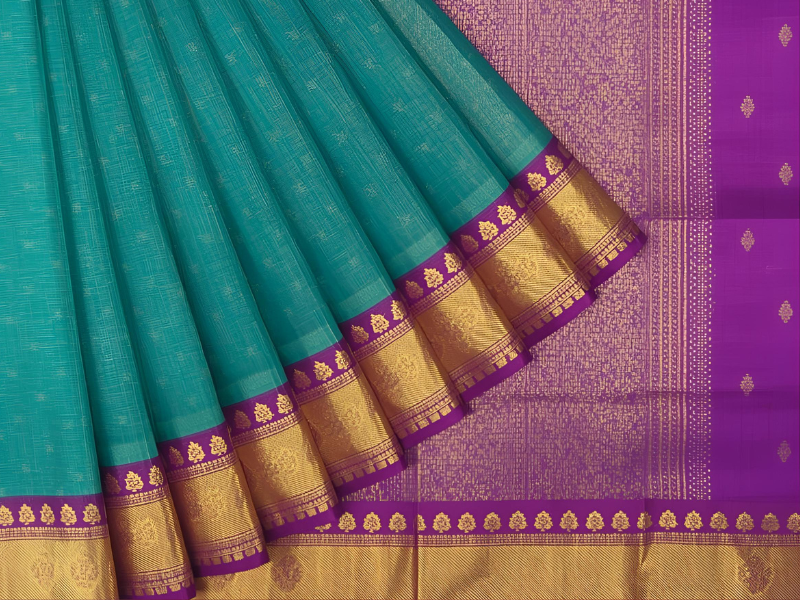
Kanjivaram sarees are time-consuming, and one saree may take 10–15 days or even months to weave, depending u pon the design. Pure silk blended with original zari increases their cost. If a vendor sells you a Kanjivaram saree at an outrageously low cost, it is probably not real. Keep in mind that genuine material and labor are always costly.
7. Touch and Feel Test
Silk has a very distinctive texture—it is soft, smooth, and warm to the touch when rubbed lightly. Synthetic sarees of polyester or blended fabric will be too slippery or cold to handle. One can recognize the difference with practice simply by feeling the material.
8. Burn Test for Silk
If you want to be 100% sure (and are willing to sacrifice a small piece), you can do a burn test:
Take a small thread from the saree and burn it. Pure silk will burn slowly, giving off a smell similar to burnt hair. It will also leave behind a powdery ash.
Synthetic silk, on the other hand, will melt quickly, form a lump, and smell like burning plastic.
This test has to be conducted only when you own the saree and not when buying it from a shop.
9. Craftsmanship and Motifs:
Original Kanjivaram sarees usually have temple borders, checks, stripes, floral motifs, or mythological and natural motifs. All the designs are intricately and well woven into the fabric. Counterfeit versions usually have printed designs or loosely woven motifs that are not detailed or refined.
10. Buy from Reliable Sources
The most reliable way to get authentic sarees is to purchase from known handloom shops, well-known saree shops, or even directly from the weavers of Kanchipuram. Numerous online stores these days also deal exclusively in handloom sarees and offer authenticity certificates.
Conclusion:
Having a Kanjeevaram silk saree is equivalent to possessing a fragment of India’s glorious cultural heritage.This is not only a clothing – it is an investment in tradition, originality, and beauty that can last centuries.There are numerous imitation sarees on the market today, so it is extremely important to be a smart buyer.To recognize an authentic Kanjeevaram silk saree, you can look for things such as the “Silk Mark” label, zari quality, weave design, luster, and workmanship.The next time you purchase a Kanjeevaram silk saree, pay attention to these things and make a smart choice.An authentic Kanjeevaram saree will make you a showstopper with your beauty, and will also turn out to be a priceless inheritance for your future generations.
Pingback: Ready-to-Wear Saree: Modern Twist on Traditional Elegance. Shop